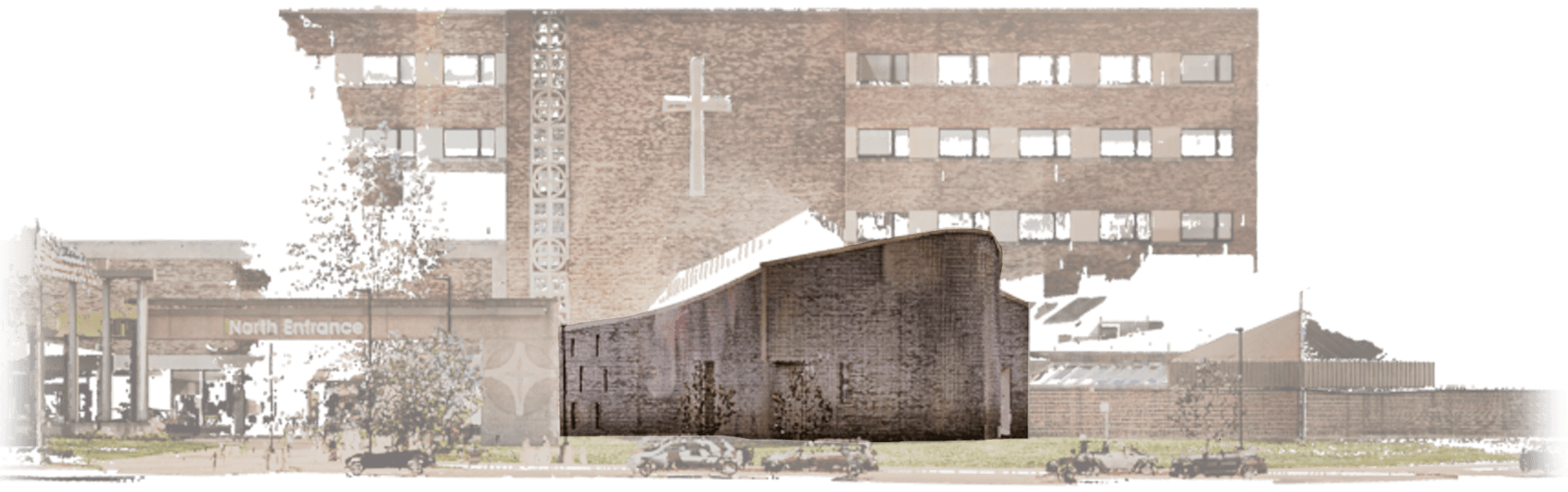
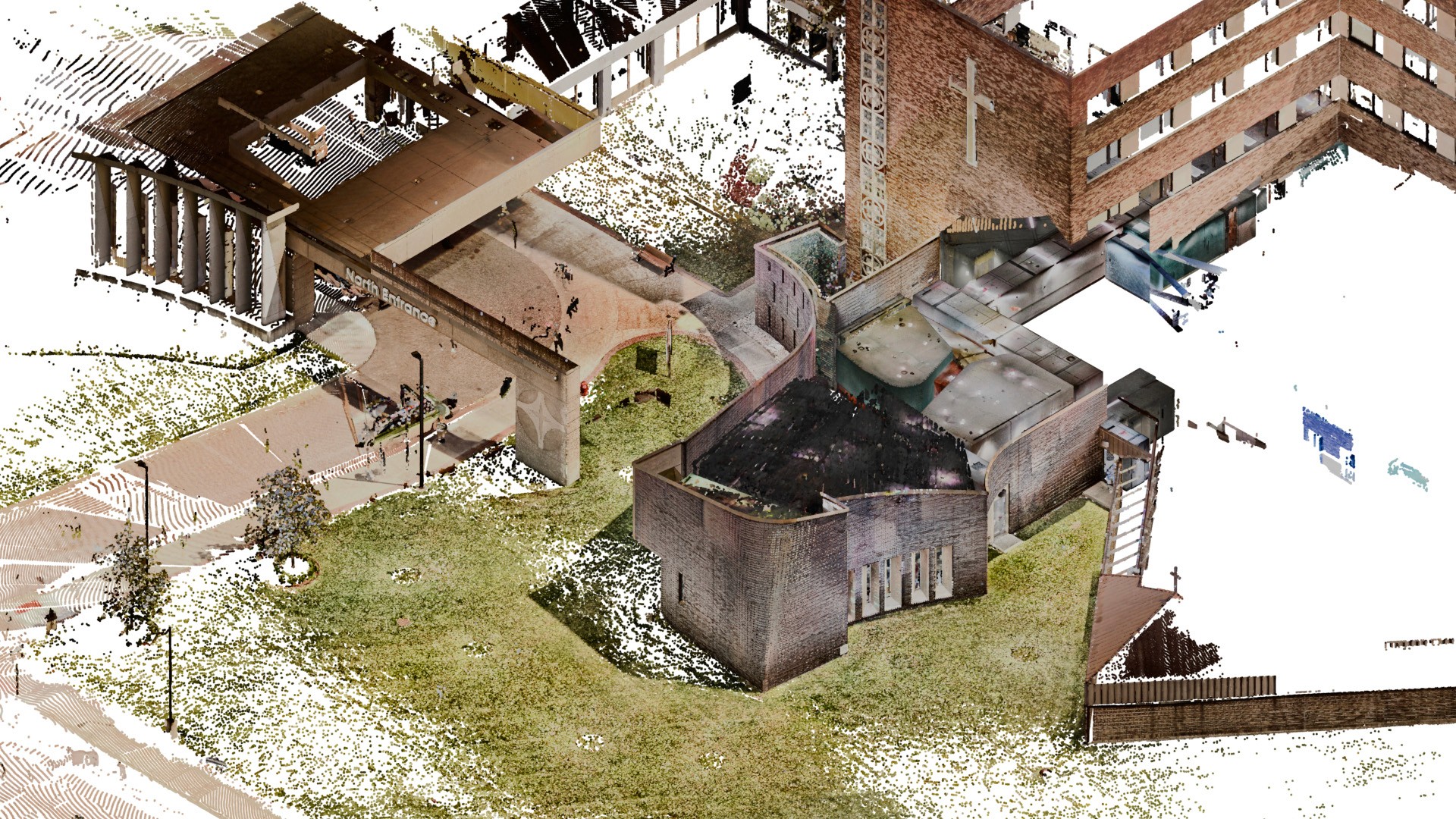
The St. Mary Mercy Chapel, located within the St. Mary Mercy Hospital campus in Livonia, Michigan, is a quiet and contemplative space designed for reflection, prayer, and healing. As part of its ongoing exploration of sacred and institutional spaces, EIPC was granted access to document the chapel through high-resolution LiDAR scanning.
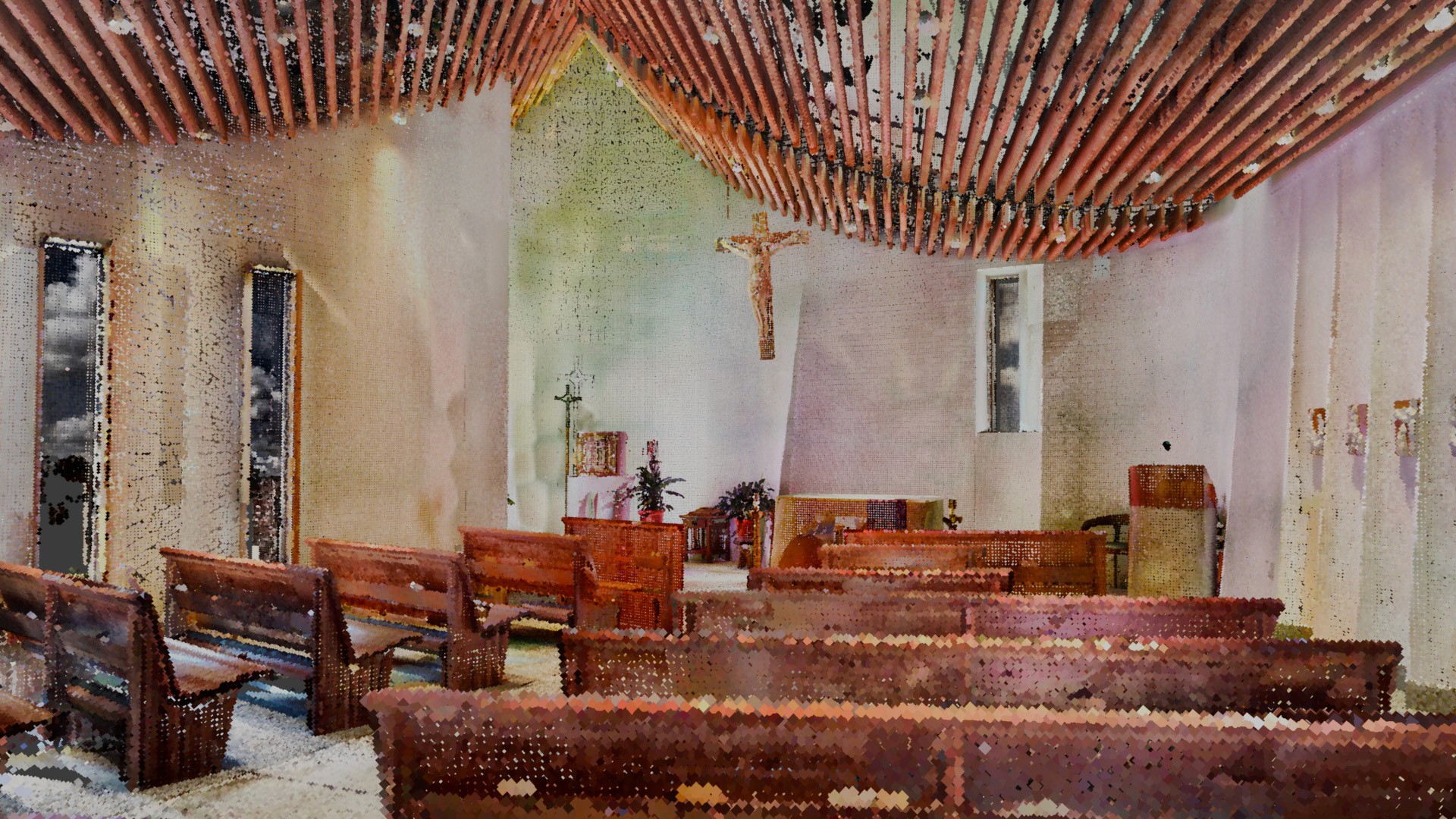
Though modest in scale, the chapel presented specific challenges for digital capture. Its interior is defined by soft lighting, polished wood surfaces, and a variety of reflective and translucent materials. These are quintessentially poor for LiDAR and photogrammetric documentation. EIPC’s workflow emphasized capturing both the architectural geometry and the atmospheric qualities of the space: the filtered daylight, the acoustical softness, and the material quietness that shapes the user’s spiritual experience.
The resulting point cloud model includes the sanctuary, pews, altar, and adjoining meditation areas, providing a complete spatial record of the chapel’s design. Of particular interest is how the architecture negotiates themes of privacy and openness, using light, layout, and materials to define a sacred threshold within a larger institutional setting.